At the heart of the K-FORM story is Pete Jaycock, who was working as a contractor and using traditional shuttering methods on concrete projects.
Like many contractors, Pete understood the practical challenges involved in traditional concrete pours. Steel and timber shuttering could be labour-intensive to install, required significant handling and, once the concrete had been poured, needed to be removed. All of that added time and, importantly, increased the overall cost of a project.
Pete began looking at whether there was a more cost-effective way of pouring concrete – one that could reduce the amount of expensive labour required while still delivering the quality and performance needed on site.
It was this practical, contractor-led approach that led to the development of the K-FORM concept.
Rather than continuing to rely on traditional shuttering that had to be installed and then removed, Pete looked at developing a lightweight system that could be installed quickly and left in place after the concrete pour.
The idea was simple: reduce the amount of labour involved, reduce handling, save time and ultimately reduce the cost of pouring concrete.
That original thinking became the foundation of K-FORM.
What started as a contractor looking for a more efficient and economical way of doing his own work developed into a purpose-designed sacrificial shuttering system. Over time, the concept was developed further into the patented K-FORM system used today.
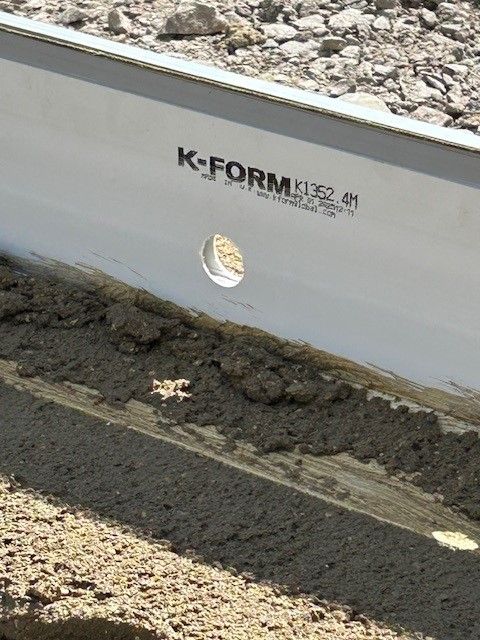
The modern system retains that same practical philosophy. It is designed to be lightweight, quick to install and easy to work with, while eliminating the need to remove the main formwork after the concrete has been placed.
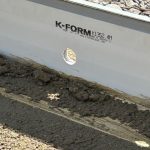
The K-FORM brochure describes the system as a recycled uPVC sacrificial screed rail, highlighting its click-together installation, pre-drilled holes for dowel bars and anchoring, and its ability to remain in place after the concrete pour.
In many ways, this is what makes the K-FORM story different. It wasn't simply a product designed in isolation and then introduced to construction. It came from a contractor experiencing the problems of traditional shuttering first-hand and looking for a better, more cost-effective way of doing the job.
That principle remains at the centre of K-FORM today: work smarter, not harder.